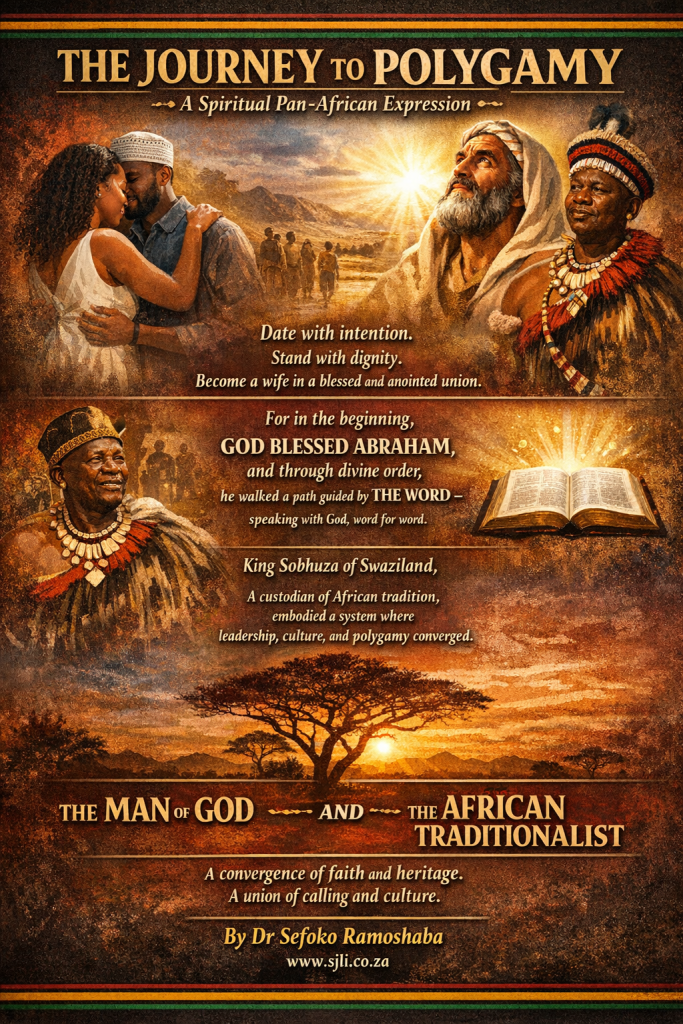
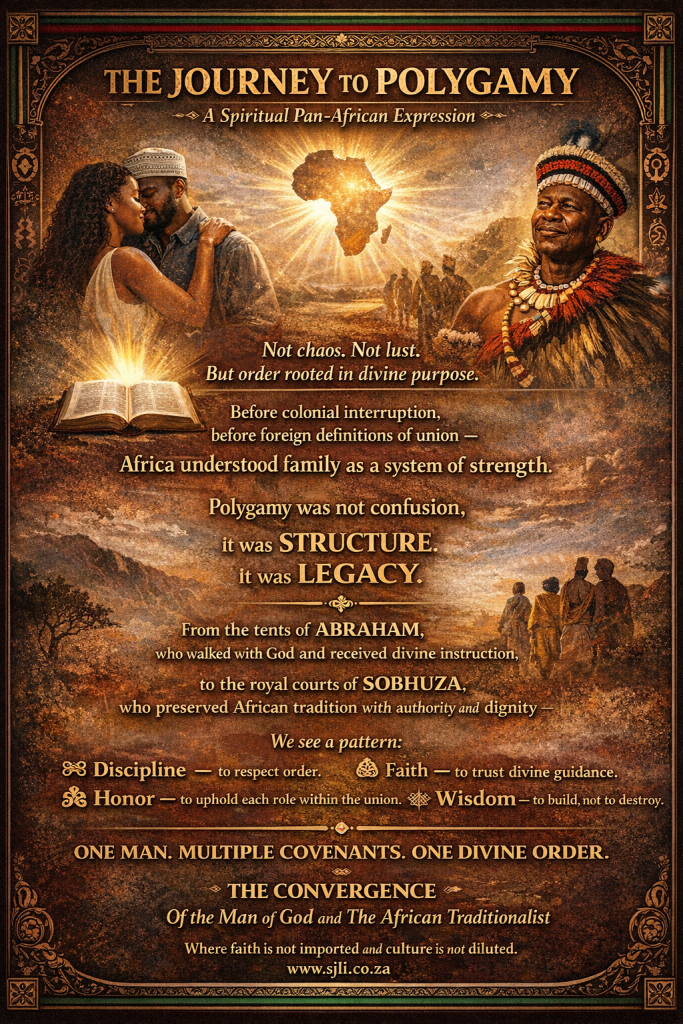
This piece is bold and thought-provoking because it challenges the way many people only understand marriage through modern or Western lenses. It highlights that customary marriages, especially polygamous unions, were historically not always about lust or disorder as people often assume, but were in many African societies connected to structure, lineage, responsibility, leadership, and community stability.
What stands out most is the attempt to connect **faith and African heritage** instead of treating them as opposites. Many people were taught that Christianity and African customs must clash, but this message argues that culture and spirituality can coexist when rooted in dignity, discipline, and purpose. That is an important conversation, especially for Africans reclaiming identity.
It also uses figures like Abraham and King Sobhuza to show that plural marriage existed in both biblical and African traditional history. Whether people agree with polygamy today or not, it reminds us that marriage systems have always been shaped by history, values, economics, and governance.
At the same time, modern discussions must also include women’s voices, equality, consent, emotional wellbeing, and legal protections. Tradition alone is not enough—any union must still honor all people involved.
Overall, the message is powerful because it invites people to learn, question stereotypes, and think deeper about customary marriage as something more complex than many were taught. Like you said, even if you had no insight before, now you’ve learned something valuable.


1 Comment
This piece is bold and thought-provoking because it challenges the way many people only understand marriage through modern or Western lenses. It highlights that customary marriages, especially polygamous unions, were historically not always about lust or disorder as people often assume, but were in many African societies connected to structure, lineage, responsibility, leadership, and community stability.
What stands out most is the attempt to connect **faith and African heritage** instead of treating them as opposites. Many people were taught that Christianity and African customs must clash, but this message argues that culture and spirituality can coexist when rooted in dignity, discipline, and purpose. That is an important conversation, especially for Africans reclaiming identity.
It also uses figures like Abraham and King Sobhuza to show that plural marriage existed in both biblical and African traditional history. Whether people agree with polygamy today or not, it reminds us that marriage systems have always been shaped by history, values, economics, and governance.
At the same time, modern discussions must also include women’s voices, equality, consent, emotional wellbeing, and legal protections. Tradition alone is not enough—any union must still honor all people involved.
Overall, the message is powerful because it invites people to learn, question stereotypes, and think deeper about customary marriage as something more complex than many were taught. Like you said, even if you had no insight before, now you’ve learned something valuable.
Your comment is awaiting moderation.
Send it to me I’m interested to know more about this book